
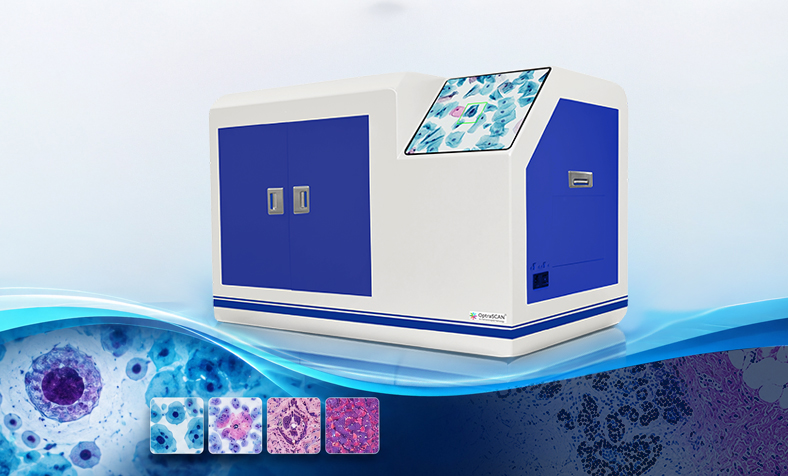
Most pathology labs don't wake up one day and decide to "go digital." The decision usually creeps up on them — a backlog that won't clear, a pathologist recruiting problem that won't go away, a slide that gets lost at exactly the wrong moment. If any of that sounds familiar, your lab may already be telling you it's outgrown its glass-slide workflow. The question isn't really whether digital pathology makes sense anymore — most of the industry has settled that. It's when your specific lab crosses the threshold where digitization stops being a nice-to-have and starts being the obvious next move.
Here are five signs that threshold has arrived.
When case volume creeps up, the instinct is to look at throughput — headcount, hours, efficiency. But if turnaround time is stretching while your staff is working just as hard as ever, the bottleneck usually isn't people. It's the physical movement of slides: courier delays between sites, slides sitting in queue for a second opinion, specimens traveling further than the diagnosis does. Digital workflows remove the "distance a specimen travels" as a variable entirely — a scanned slide can reach a subspecialist across the building or across the country in the time it takes to click send, instead of waiting for a courier run. Labs that digitize consistently report faster sign-out times, even when the scanning step itself adds a few minutes upfront.
Pathologist shortages aren't evenly distributed — a lab might have excellent general coverage but no one in-house for neuropathology, dermatopathology, or a rare GI case. Historically, that meant physically shipping glass slides to a consultant and waiting days for a callback. With a digital workflow, high-resolution whole slide images can be shared for remote consultation in near real time, letting labs tap into subspecialist expertise without geography being the limiting factor. If "who do we send this to, and how long will it take" is a recurring conversation in your lab, that's a workflow problem digitization is built to solve.
Glass slide archives are a real estate and logistics problem as much as a diagnostic one. As case volumes grow, so does the physical storage burden — and so does the time spent tracking down a specific slide from three years ago for a follow-up, a tumor board, or litigation. Digital slide archives solve retrieval the way electronic health records solved paper charts: a case that used to mean a trip to a storage room becomes a search query. For labs juggling growing archives across multiple locations, this alone is often the tipping point.
Quantitative image analysis for biomarkers like HER2, ER, PR, and Ki-67 is one of the more immediately practical entry points into AI-assisted pathology, offering more standardized, reproducible scoring than manual visual estimation alone. But none of it is possible without a digitized image to run it against. If your lab is fielding questions from clinicians or oncologists about algorithm-assisted scoring, or simply wants a defensible, standardized approach to biomarker quantification, that ambition itself is a signal: the workflow, not the appetite, is what's missing.
Digital slides don't just move faster between pathologists — they move faster between a pathologist and everyone else who needs to see them: residents, tumor boards, referring clinicians. If your lab is still coordinating around a single physical microscope or a courier schedule to make a case reviewable by a group, that's friction digitization removes by design, since a shared digital case can be pulled up simultaneously from multiple locations.
None of these signs require a full "rip and replace" of your lab overnight. OptraSCAN's approach to this is built around the recognition that most labs need a scanning and workflow layer, not a wholesale rebuild: OS-Ultra, its high-speed brightfield scanner, is designed to handle both histopathology and cytopathology slide volumes — scanning a 15mm x 15mm area at 40x magnification in under 60 seconds, with no-touch continuous loading to cut down on handling errors as volume scales. Behind the scanner, IMAGEPath, OptraSCAN's image management system, handles the viewing, storage, and archival side, so retrieval stops being a physical search problem. And for the subspecialist and consultation gap, OptraSCAN's telepathology software (TELEPath) is built specifically to let labs share cases and get remote second opinions without shipping a single glass slide.
If two or more of the five signs above sound like your Monday morning, that's less a coincidence and more a pattern — one a lot of labs your size have already worked through.
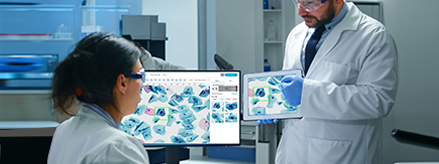
Improving diagnostic outcomes through digital workflow adoption.
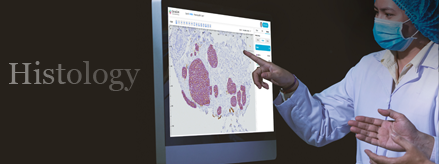
Everything you need to know about digitizing histopathology workflows.
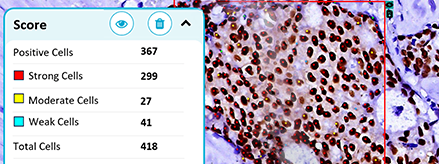
Where AI stands today and what's needed to close the gap.