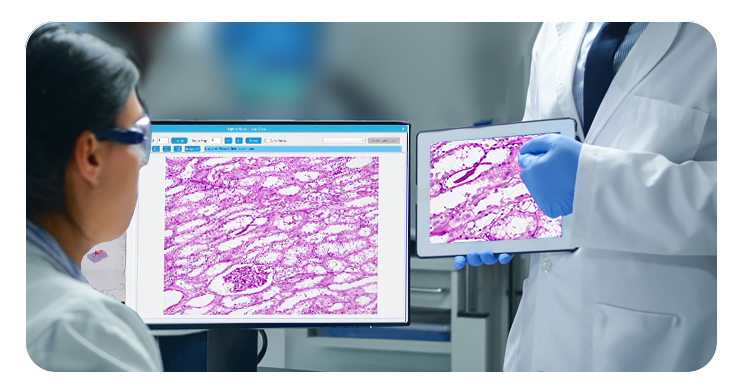
A frozen section imaging modality purpose-built for real-time intraoperative review. Live View Mode enables instant digital microscopy as slides are prepared — supporting pathologist-led interpretation in speed-critical surgical environments.
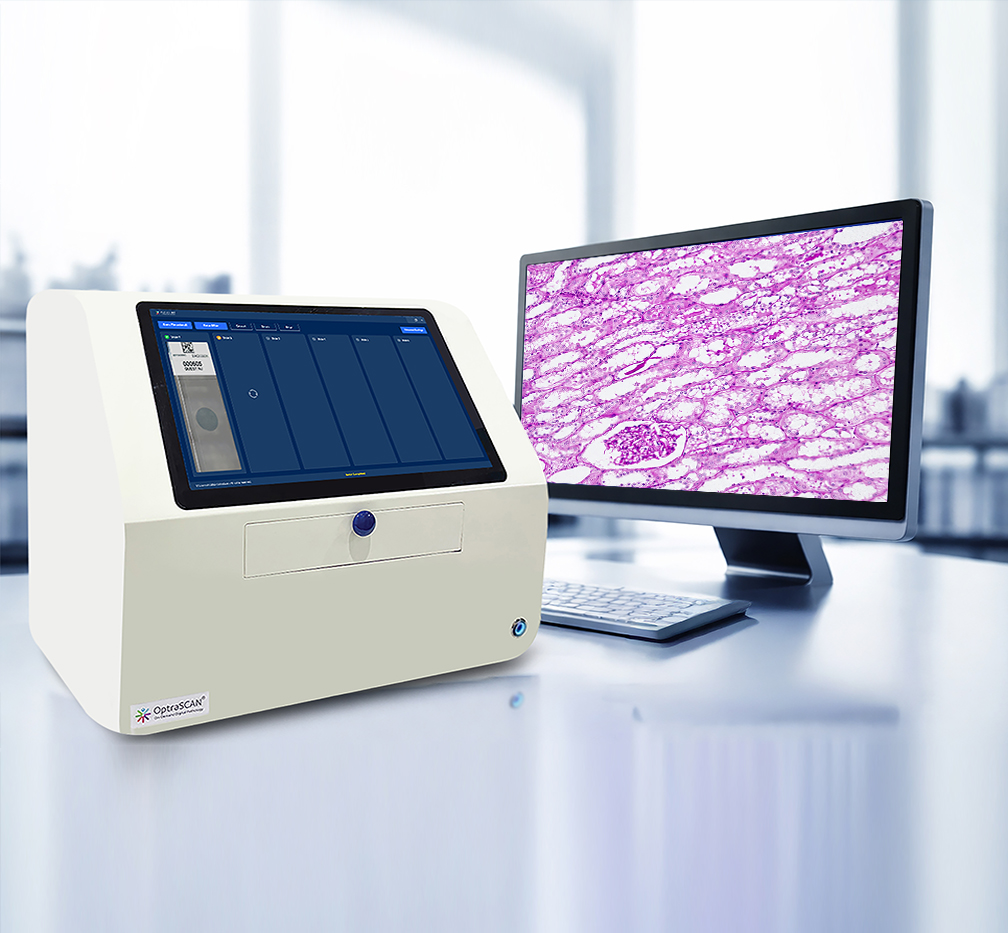
OS-FS supports pathologist-led interpretation in speed-critical environments, eliminating unnecessary scanning, storage, or workflow complexity.
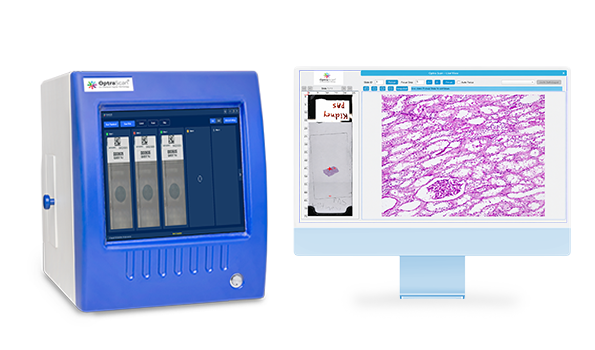
Frozen section slides are prepared using standard intraoperative protocols. No special handling required.
Slides are visualized instantly using Live View Mode for real-time digital microscopy — no post-processing delays.
Pathologists can review and consult remotely across locations via TELEPath — extending expert access without disruption.
Findings are communicated immediately to the surgical team to support real-time decision-making.
Real-time slide visualization using Live View Mode — no whole slide scanning required. Instant access to frozen section imagery without post-processing delays.
Enables real-time consultation and collaboration across hospital networks via TELEPath. Expert opinions available regardless of physical location.
AI-powered detection enhances visualization accuracy and consistency. Automated focus setting and tissue detection support efficient live imaging.
Patented composite imaging and extended depth visualization improve imaging of uneven frozen section specimens — critical for diagnostic* quality.
One-step automated scanning with intelligent focus and tissue detection. Load, scan, and move to the next case without babysitting.
Supports standard 1×3″ slides plus 2×3″, 3×3″, and 4×3″ mega slides — accommodating diverse intraoperative specimen types.
Rapid examination of tissue samples during surgery, providing real-time diagnostic* information for immediate surgical decision-making.
Evaluate suspicious lesions and tumors for malignancy during the procedure. Assess margin status and facilitate immediate treatment planning.
Evaluate tissue from pediatric patients during surgery to diagnose congenital abnormalities, tumors, and conditions requiring prompt intervention.
Training pathology residents and students in interpreting histological specimens and making intraoperative diagnoses* with digital tools.
OS-FS is delivered as a frozen section imaging modality on OptraSCAN's compact-footprint platforms — both suitable for surgical suite environments.
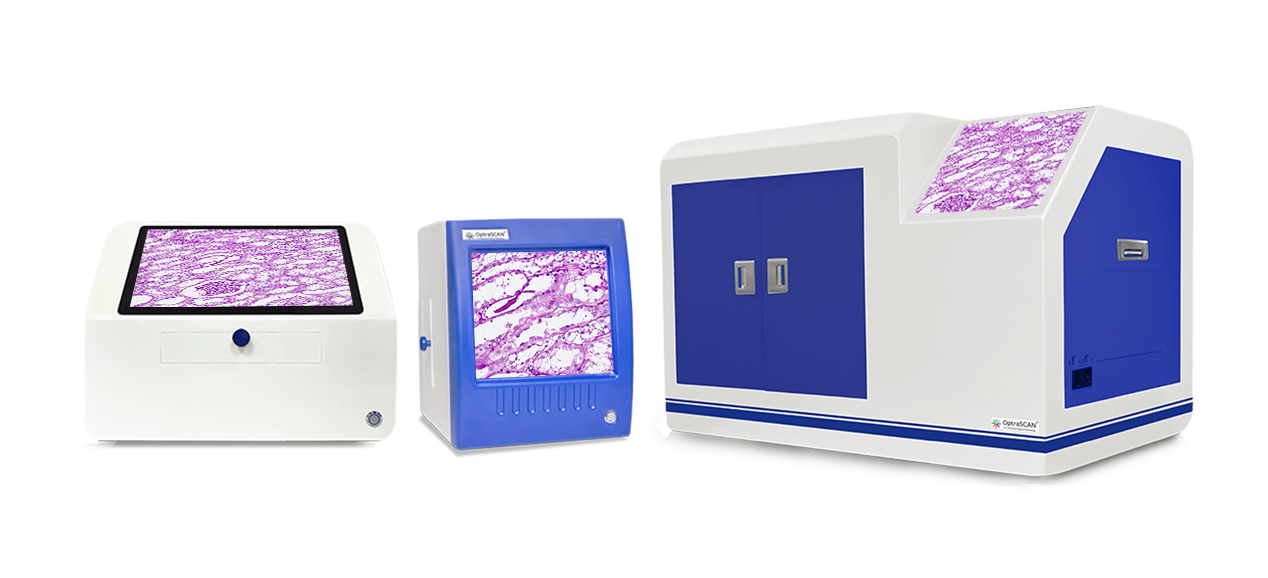
Compact platform ideal for intraoperative and near-OR environments. Small footprint, walk-away automation, full Live View Mode support.
View OS-SiXFlexible platform for rapid frozen section and live review workflows. Higher slide capacity for busier surgical pathology services.
View OS-LiteEnterprise-grade platform for institutions requiring frozen section capability alongside high-throughput brightfield scanning in a single system.
View OS-UltraOS-FS integrates seamlessly with OptraSCAN's digital pathology ecosystem:
See how OS-FS can enable live frozen section review, remote consultation, and faster surgical decisions.
Request a Demo