
AI-powered digital transformation of H&E-stained slides into high-fidelity IHC-equivalent images — eliminating costly reagents, reducing turnaround time, and enabling precise biomarker analysis without additional tissue consumption.


Predictive Biomarker IHC replaces the entire physical staining pipeline with a single AI inference — no chemicals, no waste, no waiting.

AI digitally replicates the staining process, completely eliminating expensive chemical stains, reagent procurement, and batch-to-batch variability.

Remove chemical processing from your workflow. Predictive Biomarker IHC minimizes toxic waste, making laboratory operations safer and more environmentally responsible.

Reduce expenses related to reagent procurement, waste disposal, and repeated staining due to inconsistent results — with no compromise on analytical quality.
Traditional IHC requires separate stains on separate slides — depleting samples and increasing costs. Predictive Biomarker IHC enables simultaneous analysis of multiple biomarkers from a single H&E section.
Analyze several markers on the same tissue sample, preserving rare biopsy material that would otherwise be consumed by sequential staining.
Study complex interactions between cell types and biomarkers without cross-reactivity issues common in traditional multiplex IHC.
Run computational analysis repeatedly without additional staining — preventing irreversible sample loss and enabling iterative research workflows.
Manual IHC is prone to variability from reagent concentration, incubation time, and subjective interpretation. Predictive Biomarker IHC delivers standardized, reproducible results across labs and pathologists — every time.
Predictive Biomarker IHC integrates with OptraSCAN's scanners, IMAGEPath software, and cloud infrastructure — or your existing third-party setup.

Deploy flexibly — accessible from anywhere for remote collaboration, or installed on-premise for secure, local processing.

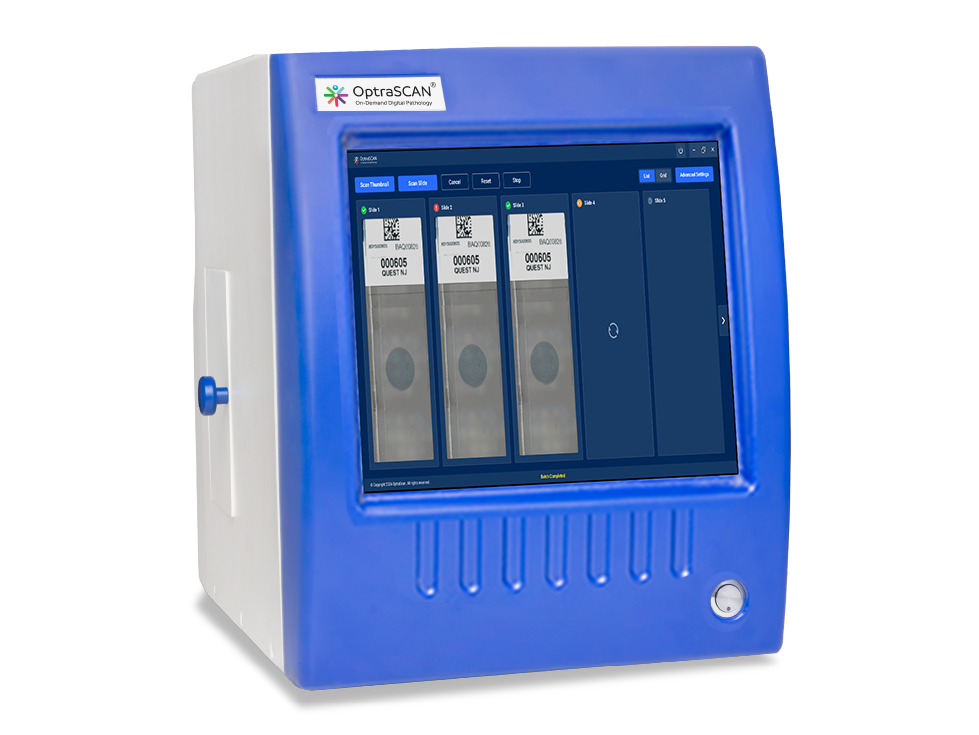
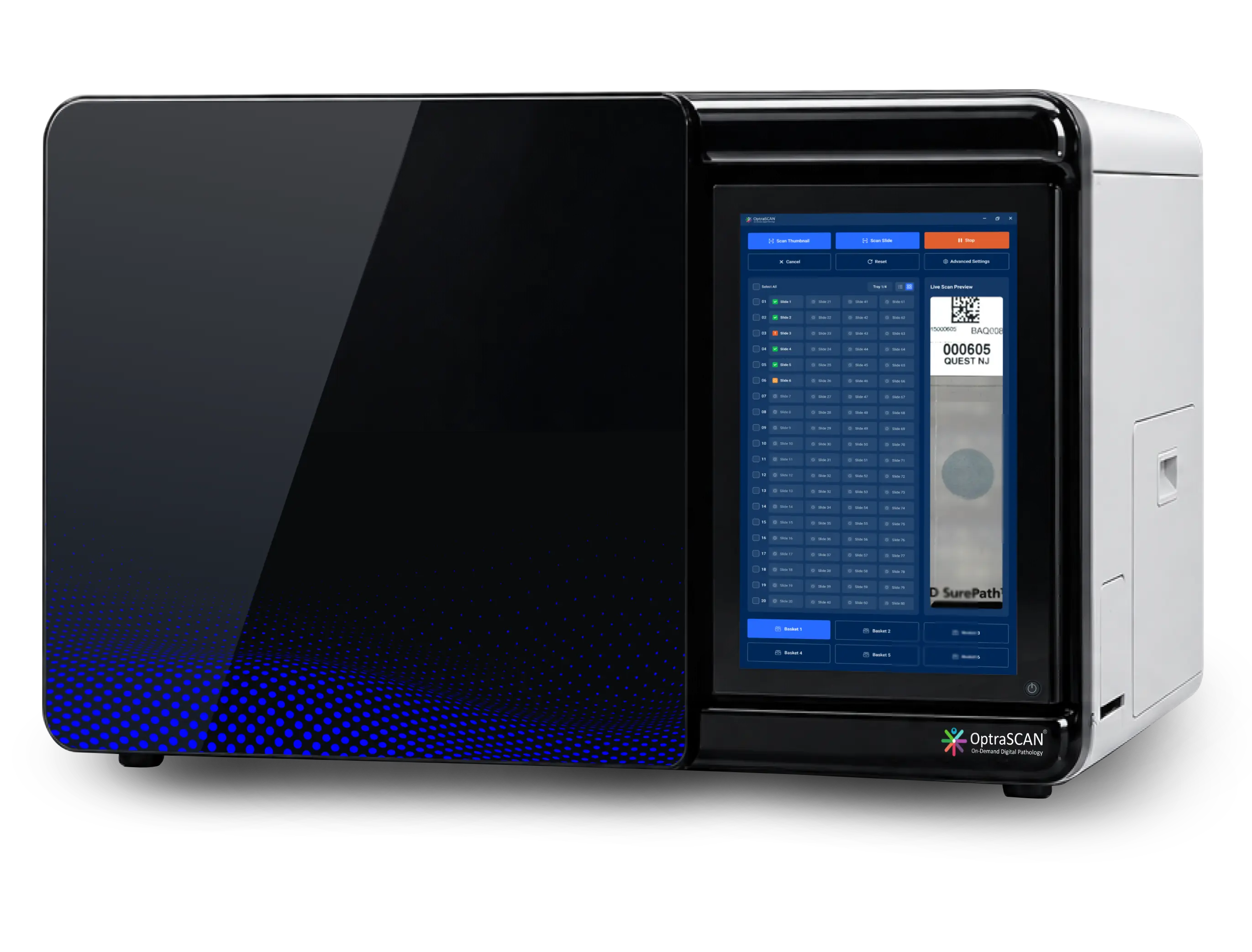
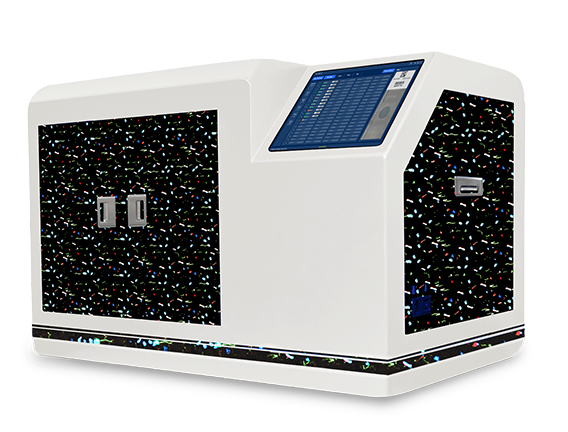
Works alongside OS-SiX, OS-Lite, OS-Ultra, OS-FLi scanners and IMAGEPath for a complete end-to-end digital pathology solution.

Designed for rapid, large-scale analysis — simultaneous processing of thousands of slides for both research and clinical environments.

AI-driven algorithms accelerate tissue scoring from hours to minutes, with structured outputs ready for downstream analysis or publication.

Watch our deep-dive into how AI-powered predictive biomarker IHC is transforming IHC workflows — from the science behind it to real-world implementation.
Watch on YouTube →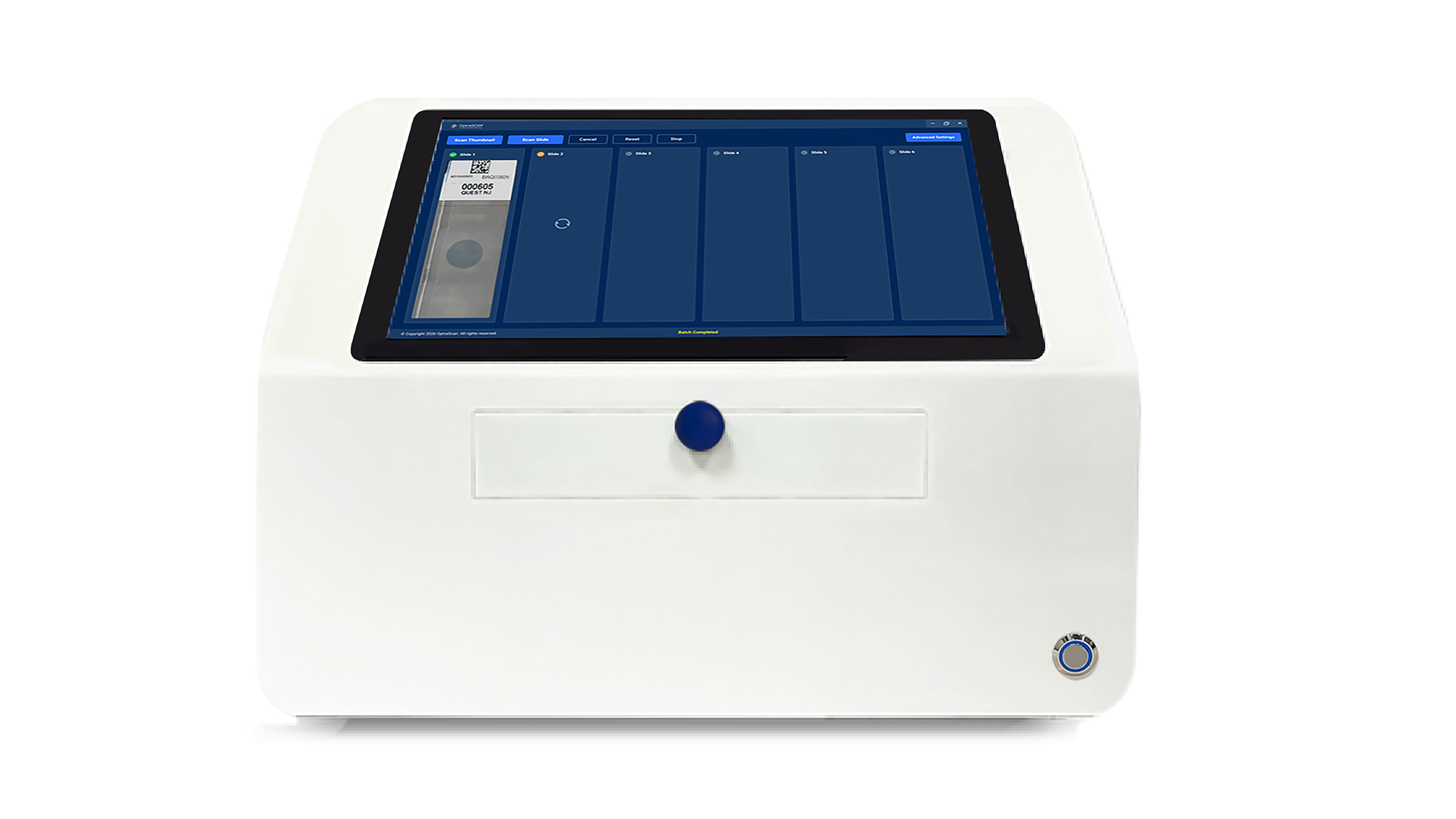
See how AI-powered predictive biomarker IHC can eliminate reagents, reduce costs, and accelerate your biomarker analysis workflow.
Request a Demo
What labs most often ask us about digital pathology, our scanners, and how to get started.
Virtual IHC uses AI to transform an H&E-stained slide image into an IHC-style image, without physical reagents or additional tissue sections. For each slide, it shows which biomarkers the model has assessed, the predicted likelihood of biomarker expression, and a heatmap overlaid on the H&E image showing where predicted expression is concentrated in the tissue.
ER, PR, Ki-67, HER2.
The true positive rate for virtual IHC currently stands at 99.87%.
Yes. Multiple markers can be analyzed from a single H&E section, preserving scarce biopsy tissue and allowing unlimited re-analysis.
Today, virtual IHC is a research tool. It generates IHC-style images computationally from existing slides [e.g., H&E], without performing an additional physical stain. This can reduce reagent use and conserve tissue, which is especially valuable when samples are small or limited. Researchers can use it to explore markers and prioritize which physical stains to run, saving reagents and tissue for the tests that matter most.
Yes. It can be deployed in the cloud or on-premise, and integrates with OptraSCAN scanners, IMAGEPath , or existing third-party setups.