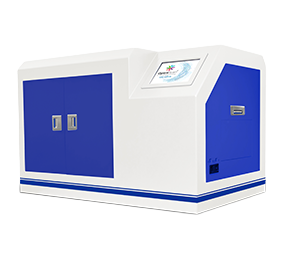
The Breast Cancer Biomarker AI Algorithm Suite by OptraSCAN® provides algorithm-assisted quantitative analysis of key immunohistochemistry biomarkers used in breast cancer assessment. Designed to support standardized interpretation and reduce inter- and intra-observer variability, the suite enables consistent evaluation of commonly assessed breast cancer biomarkers while maintaining full pathologist overview of final interpretation. The AI suite is deployable as a standalone software solution.
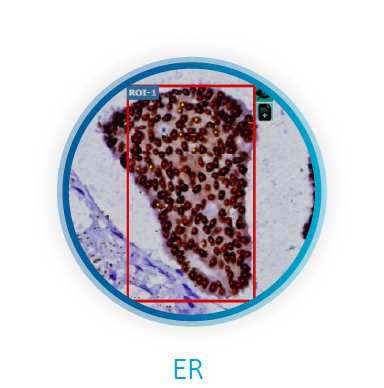
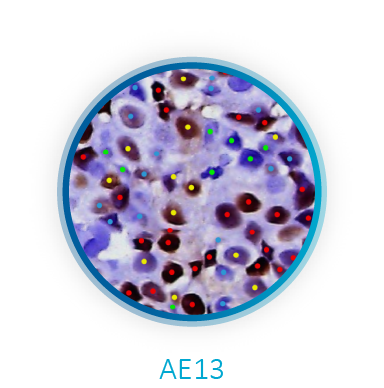


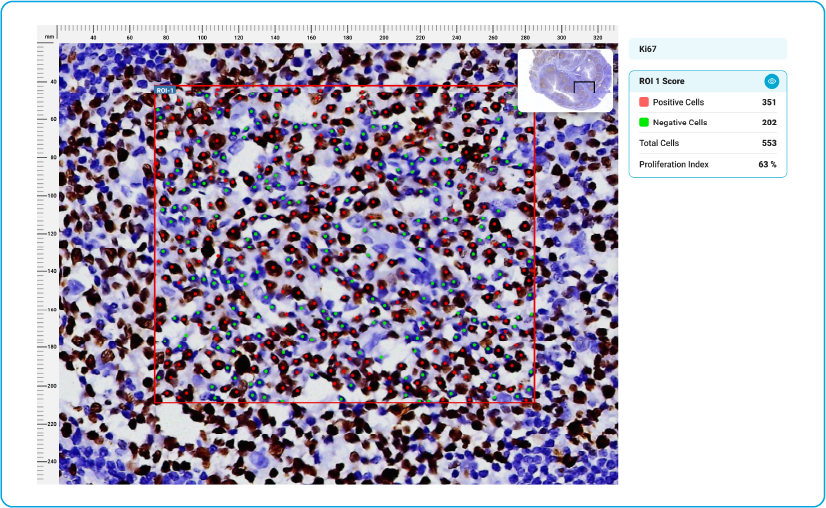
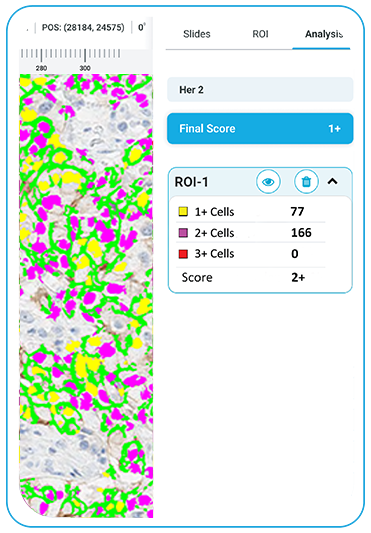
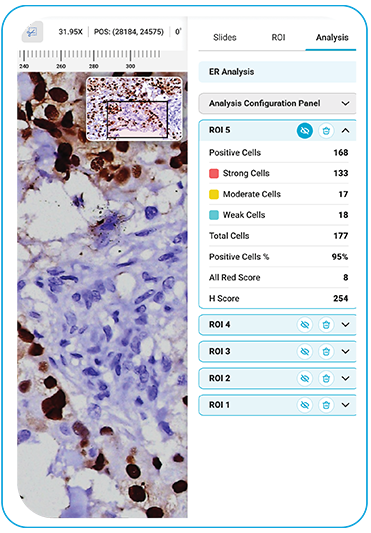
Each algorithm is designed to support quantitative assessment and review by generating visual overlays and numerical outputs to assist pathologists in evaluating biomarker expression patterns across whole slide images.
Our breast cancer AI acts as a powerful review assistant. It analyzes digitized slides to prioritize cases and guide the pathologist's focus, making workflows more efficient. Crucially, it is designed to support (not replace) clinical judgment. The final diagnostic* assessment and reporting remain the definitive responsibility of the reviewing pathologist.

Slides are digitized at high resolution to preserve cellular and staining detail.

Algorithms analyze biomarker expression across whole slides.

Automated scoring and quality checks support biomarker assessment.

Quantitative outputs support pathologist review and final interpretation.
Quantitative assessment of biomarker expression on whole slide images
Visual overlays to support pathologist review and interpretation
Heatmaps and region-level analysis highlighting staining distribution
Consistent application of scoring logic to reduce observer-related variability
Pathologist-in-the-loop workflow with user-controlled review and interpretation
Software-only deployment independent of scanning hardware
Compatible with OptraSCAN scanners, IMAGEPath® (OptraSCAN's image management system), third-party digital scanners and new/existing lab workflows
Suitable for clinical laboratories, research institutions, and translational workflows
Designed to integrate into existing or planned digital pathology environments or be deployed as a standalone analytical module
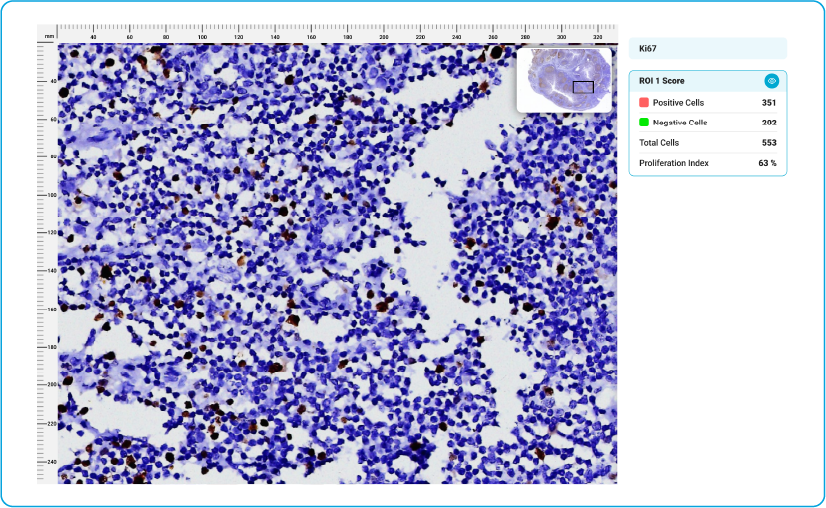
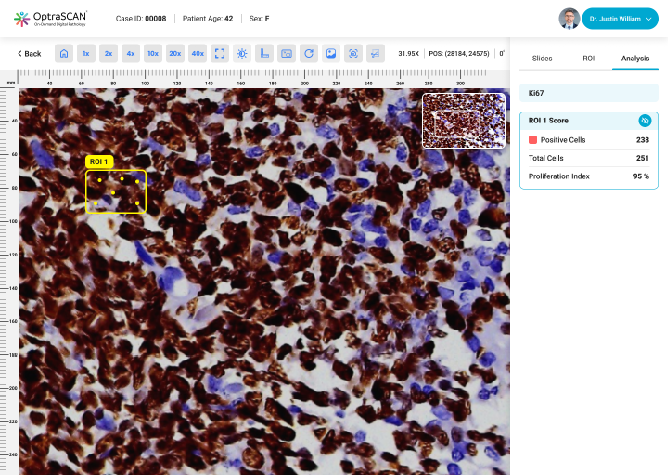
The Ki-67 algorithm within the Breast Cancer Biomarker AI Suite has demonstrated high concordance with reference-standard methods in a peer-reviewed study. Key findings show a strong correlation with quantitative analysis, reduced observer bias, and improved consistency in Ki-67 proliferation index assessment. This supports its reproducibility and reliability for clinical use.

ER
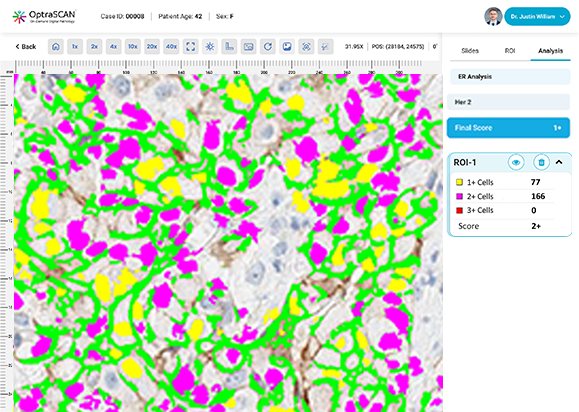
HER2
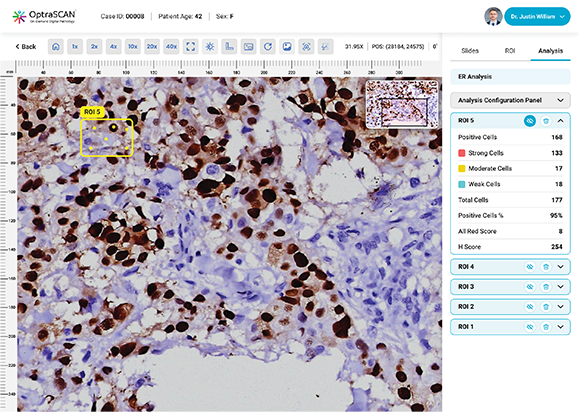
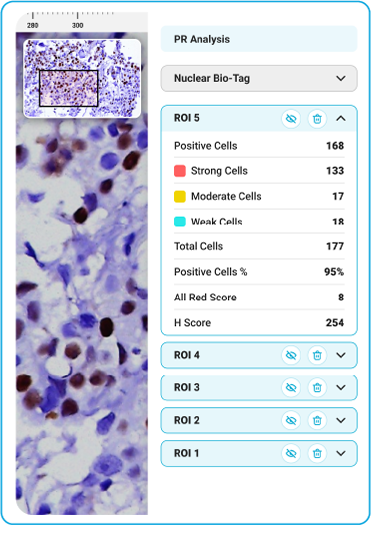
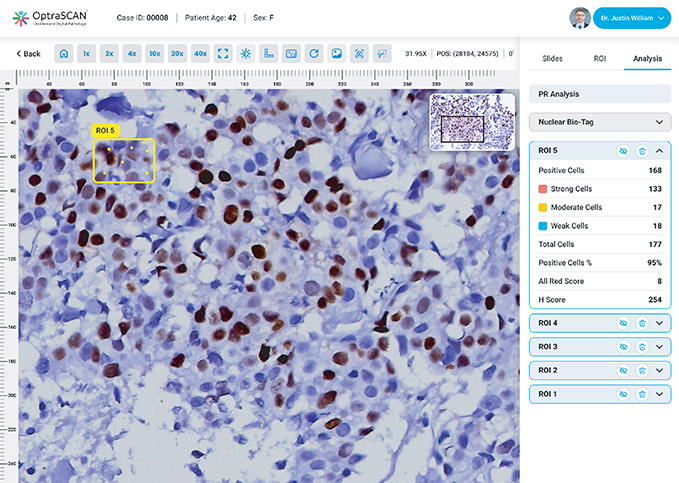
PR
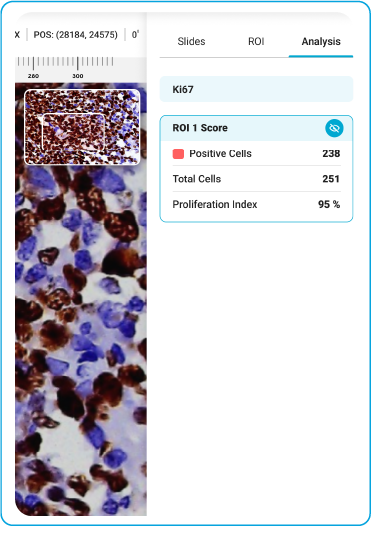
Ki-67

Pathology labs exploring AI for breast cancer biomarker analysis

Labs with current or future digital pathology workflows

Teams needing standardized, reproducible biomarker quantification

Research and translational studies on breast cancer biomarkers

Institutions seeking scanner-independent AI analysis
Please fill out the form below and complete all questions with an asterisk (*)